
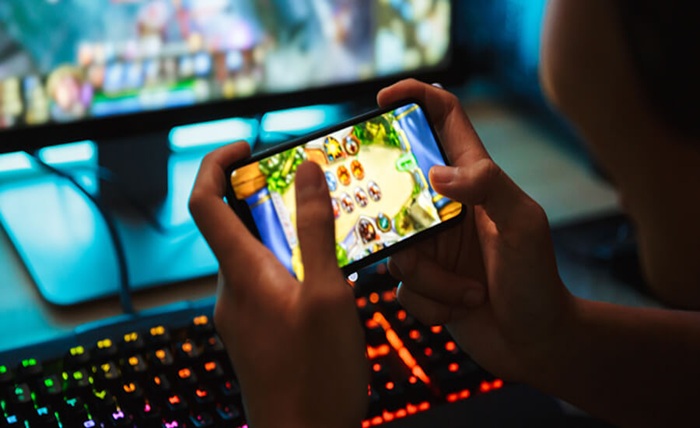
Following sports used to be fairly straightforward. You watched the match, checked the score later if you missed it, maybe read a report the next morning. That was enough for a lot of people.
It doesn’t work like that now.
The game is still the centre of it, obviously, but everything around it has spread out. Live stats, push alerts, clips, fan reactions, side conversations, second screens, all of it sitting there at once. You’re not really just “watching” anymore. You’re tracking, checking, scrolling, reacting, then looking up because something actually happened on the pitch.
Live tracking changed the pace of it
Official league apps, big sports sites, and score-tracking platforms now keep matches moving on your screen even if you are nowhere near a TV. Live scores, line-ups, player stats, possession, event timelines, it updates as the game goes. ESPN does it. BBC Sport does it. Official league apps do it too.
That changes the relationship a bit. You can follow a match closely without fully watching it, which would’ve sounded odd years ago but doesn’t anymore. A lot of people do exactly that when they’re at work, on a train, or pretending to pay attention to something else.
I’ve done it in queues, usually with one eye on the screen and the other on the door.
Your phone became the main way in
This part is easy to miss because it already feels normal.
For a lot of fans, the phone is the first stop now. Not the TV. Not the laptop. The phone.
That’s where the alerts hit first. Line-ups pop up, clips start rolling in, and the app keeps pulling you back, one more update about your team, another injury, a goal from a match you weren’t even following. Google and Apple keep pushing notifications and personalized feeds as a core part of mobile, and sports apps lean into it pretty hard, mostly because it works.
You don’t wait for updates anymore. They find you.
That sounds small. It isn’t.
Watching a match got messier
Messier in a good way, mostly.
A match is rarely just one screen now. You’ve got the main broadcast in front of you, then something else in your hand, stats, commentary, social reactions, updates from another game happening at the same time. Maybe a group chat too, which is usually half useful and half nonsense.
That second-screen habit changes the feel of watching. You are still following the game, but you are also checking around it constantly. A corner here, a booking there, a clip from another ground, somebody arguing over a decision before the replay even shows up. It all piles on pretty quickly.
And once you get used to that, plain viewing feels oddly quiet.
Fans move between platforms without really noticing
This is probably the bigger change.
You might start on a live score app, jump to social media for reactions, open a streaming platform for highlights, then end up checking stats on another site altogether. Somewhere in that same stretch, different kinds of sports-related platforms appear next to each other, official apps, media sites, community spaces, even things tied to online sports betting in UAE depending on what the user was already looking for.
The point is not that every platform does the same thing. They don’t.
It’s that the gaps between them got smaller. You move through them without stopping to think, now I’m switching from one category to another. You just tap through and keep going.
The feed is not the same for everyone
This part matters more than it gets credit for.
Sports platforms now shape the experience around what you already follow. Favorite teams, leagues, clips, alert preferences, all that gets folded into the app. So two people can open the same platform and get a pretty different version of it straight away.
One person gets football alerts and transfer stories. Someone else gets tennis clips and Formula 1 updates. Another gets a stack of post-match breakdowns because that is what they keep opening. The exact systems behind that are usually hidden, which is annoying if you like seeing how things work, but the result is obvious enough. The platform starts learning your habits, then feeding them back to you faster.
Useful, yes. Also a little strange sometimes.
It doesn’t stop when the match ends
This might be the part that changed fan engagement the most.
The final whistle used to be more of a stopping point. Now it’s just the moment the next layer starts. Polls, reaction clips, short analysis, comment threads, live chats, breakdowns, ratings, arguments that go on much longer than they should. You get all of that almost immediately.
So the engagement spreads out. Before the match, during the match, after the match. Then into the next day if the result was big enough, or bad enough.
That longer cycle keeps people around even when nothing is being played right in front of them.
So what actually changed
Not one feature. More the way everything got connected.
Fans are still watching matches, of course. That part hasn’t gone anywhere. But now they are also tracking games live without a broadcast, using their phones as the main entry point, splitting attention across screens, and moving between platforms like it is one continuous feed instead of a set of separate stops.
It’s more active now. More scattered too.
You check one update, then another, then something buzzes in your pocket before the replay has even finished, and that’s kind of the whole thing.