
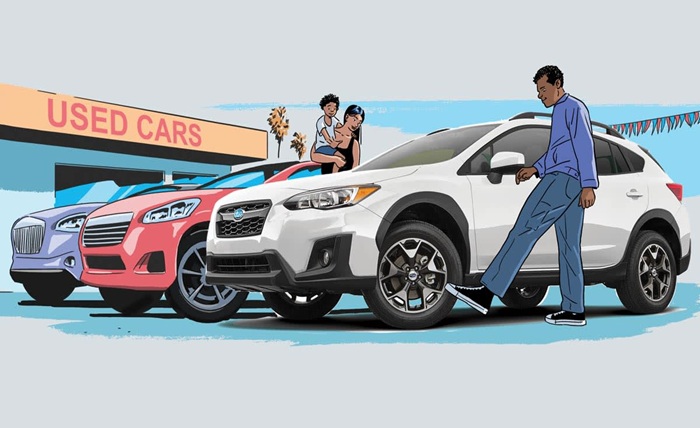
Most people spend more time researching a new television than they do checking the background of a used car.
It’s understandable. You find a car you like, the photos look great, the seller seems genuine, and after a quick test drive everything feels fine. At that point it’s easy to convince yourself you’ve found a bargain.
The problem is that some of the most expensive issues a used car can have aren’t visible when you’re standing in a supermarket car park kicking the tyres.
That’s why experienced buyers nearly always run a vehicle history check before handing over any money.
The Things You Can’t See
When viewing a used car, you can usually spot obvious problems. Worn tyres, damaged bodywork, strange noises and warning lights tend to stand out fairly quickly.
What you can’t see is whether the car was written off three years ago.
You can’t see whether there’s outstanding finance attached to it.
You can’t see if it was reported stolen, scrapped, exported, or if its mileage history raises questions.
Those are the sorts of issues that only become apparent when you start looking at the vehicle’s records rather than the vehicle itself.
Why Buyers Still Call It an HPI Check
Ask ten people what checks they carry out before buying a car and most will still say they run an “HPI check”.
It’s become one of those motoring terms that has stuck around, even though there are now several companies offering vehicle history reports.
Whatever you call it, the goal is the same: finding out whether the vehicle has a past that could cause problems later.
That’s why many experienced buyers won’t part with their money until they’ve run a vehicle history check through a trusted provider such as Full Car Checks. A quick report can reveal issues that aren’t obvious during a viewing or test drive and could save you from making an expensive mistake.
The One Check That Could Save You Thousands
Of all the information a vehicle history report provides, outstanding finance is arguably the most important.
Imagine paying thousands of pounds for a car only to discover a finance company still has a legal interest in it.
It’s not something most buyers even think about until it happens.
The cost of a history check is tiny compared to the financial headache of finding yourself caught up in a dispute over ownership.
Written Off Doesn’t Always Mean Scrap
This is where things often become misunderstood.
A lot of people hear the phrase “insurance write-off” and immediately walk away.
In reality, plenty of written-off vehicles are repaired correctly and return to the road. Some go on to provide years of reliable motoring.
The important thing isn’t necessarily the fact the car was written off. It’s knowing about it before you buy.
A seller who is upfront about previous damage and has evidence of professional repairs is very different from a seller who conveniently forgets to mention it.
It’s Not Just About Avoiding Bad Cars
Many people assume a vehicle history check is designed to help you reject cars.
Often it does the opposite.
Sometimes a report comes back completely clean. No finance, no stolen markers, no insurance write-offs and no obvious concerns.
That peace of mind can be just as valuable as uncovering a problem.
When you’re spending several thousand pounds on a vehicle, reassurance has a value of its own.
A History Check Isn’t a Magic Wand
Of course, no report can tell you everything.
A history check won’t tell you whether the clutch is about to fail. It won’t tell you if the gearbox feels rough or whether the suspension is worn out.
That’s why it should be viewed as one piece of the puzzle.
A sensible buyer will still inspect the vehicle carefully, review its service history, check the MOT records and take it for a proper test drive.
The best buying decisions come from combining all of those things together.
The Bottom Line
The vast majority of used car purchases go smoothly. But when things go wrong, they can become expensive very quickly.
For the price of a takeaway meal, a vehicle history check can reveal information that a seller may not know, may have forgotten, or in some cases may prefer not to mention.
Whether you call it a vehicle history check or an HPI check, it’s one of the simplest ways to protect yourself when buying a used car.
After all, it’s far better to discover a car’s history before you buy it than afterwards.